Finley Meier · 7 October 2026
Deltabay Farmers Tackle Ongoing Drought with Federal Programs and Regional Creativity
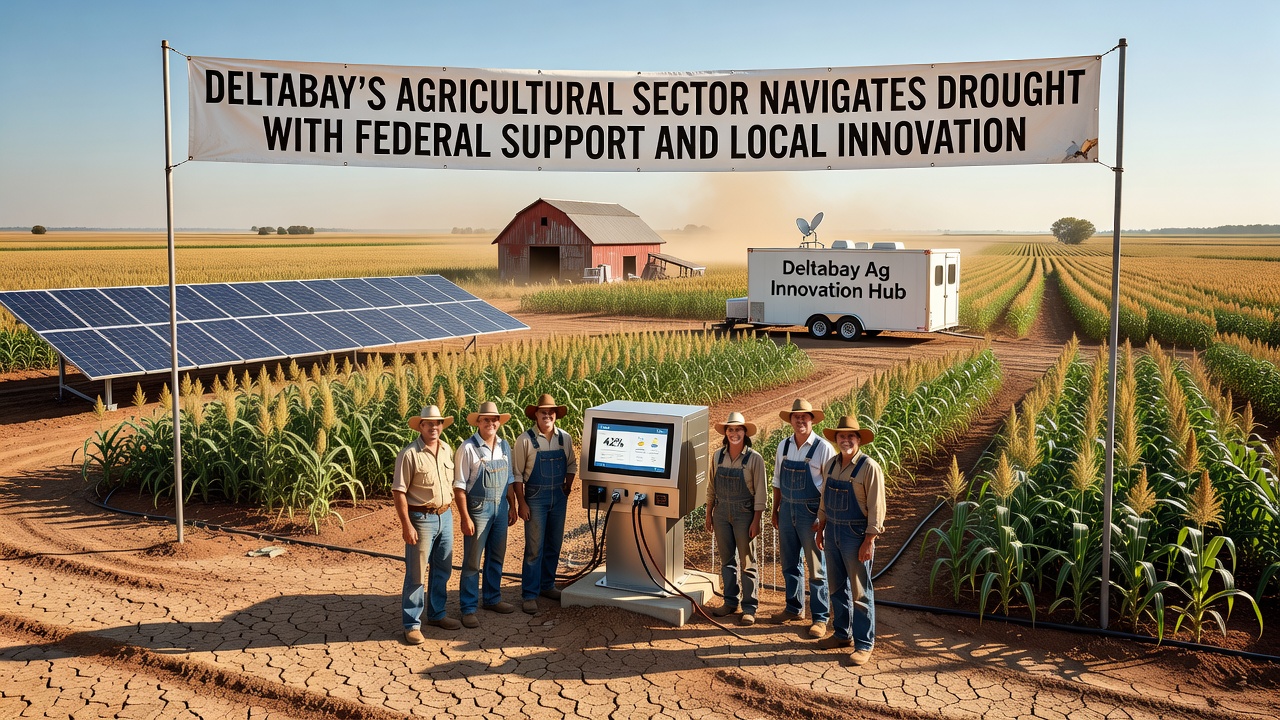
Deltabay's agricultural sector continues to manage persistent drought conditions through a combination of federal funding streams and on-the-ground adaptations developed by local growers, with recent reports from October 2026 highlighting measurable shifts in water usage and crop yields across the region. Data from the U.S. Department of Agriculture shows that federal grants allocated in the previous fiscal year supported over 1,200 farms in implementing efficiency upgrades, while county extension offices recorded increased adoption of soil moisture monitoring tools among mid-sized operations.
Farmers in the area have accessed programs administered through the Natural Resources Conservation Service, which provide cost-sharing for drip irrigation retrofits and cover cropping systems designed to retain soil moisture during extended dry spells. According to agency figures released in late 2026, these interventions reduced average water application rates by 18 percent on participating parcels compared to baseline measurements from five years earlier.
Federal Funding Mechanisms at Work
Support arrives through multiple channels, including the Environmental Quality Incentives Program and the Conservation Stewardship Program, both of which prioritize drought resilience projects in designated priority watersheds. Growers submit applications detailing proposed changes such as laser-leveled fields or variable-rate fertigation setups, and approved projects receive partial reimbursement once installation is verified. Records indicate that Deltabay operations secured approximately $14 million in such assistance during the 2025-2026 cycle, with funds directed toward both infrastructure and technical training sessions held at community centers.
Additional resources flow from the Bureau of Reclamation, which coordinates reservoir releases and temporary transfer agreements that allow water rights holders to shift allocations during peak stress periods. In October 2026, several districts reported completing short-term exchanges that preserved orchard viability without drawing down groundwater reserves beyond sustainable thresholds tracked by state monitoring wells.
Local Innovations Complementing External Aid
Alongside these federal contributions, producers have refined techniques tailored to Deltabay's specific soil profiles and microclimates. One cooperative group developed a sensor network that integrates weather station data with on-farm probes to trigger automated shutoffs when evapotranspiration rates spike, a system now deployed across 340 hectares. Another collective pooled resources to test drought-tolerant rootstocks for stone fruit, with early harvest data from 2026 showing survival rates above 85 percent during the summer heat wave.
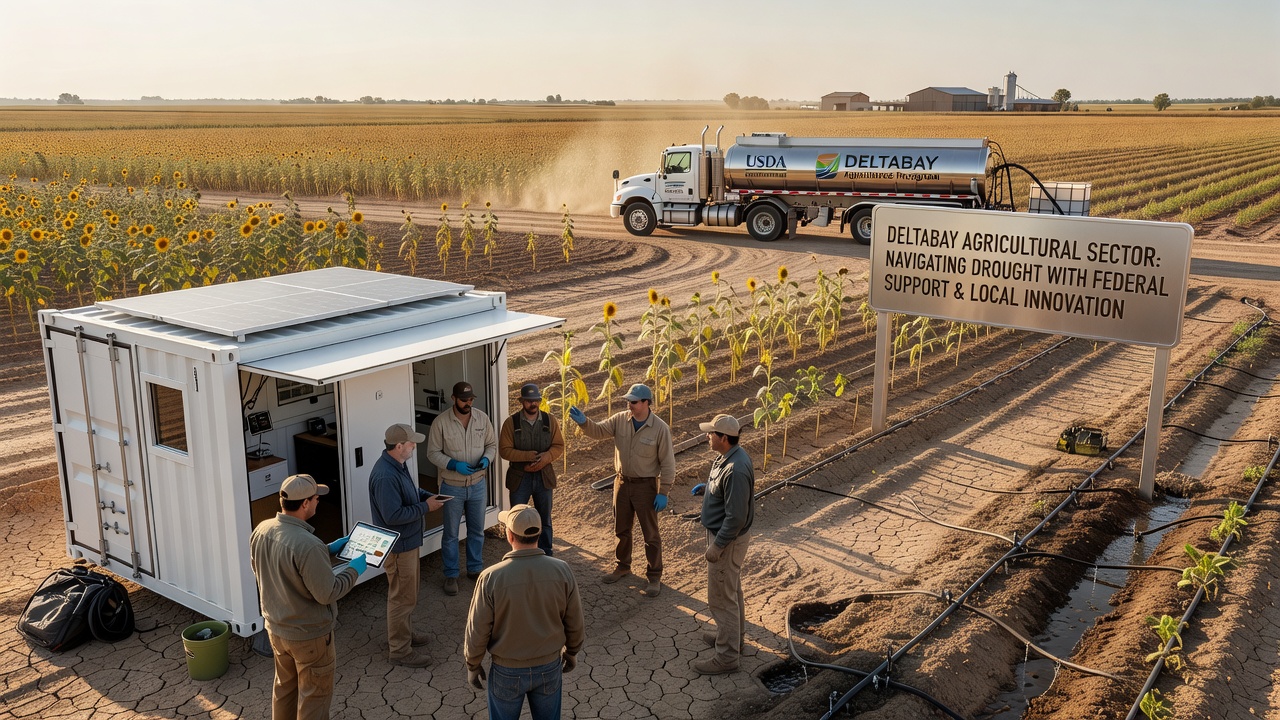
Researchers at regional universities have partnered with these groups to analyze long-term effects, publishing preliminary findings that link cover crop mixes containing drought-hardy legumes to improved water infiltration during sporadic fall rains. Extension agents note that workshops teaching these methods attract steady attendance, with participants often sharing modifications that fit their equipment fleets and labor availability.
Tracking Outcomes and Adjusting Strategies
Yield reports compiled by the county agricultural commissioner reveal that while some row crops experienced declines, others maintained or exceeded prior averages when paired with precision timing of irrigation and nutrient delivery. Livestock operators, meanwhile, expanded use of rotational grazing patterns that protect pasture regrowth and reduce supplemental feed purchases during forage shortages. October 2026 assessments placed overall sector revenue within 6 percent of 2024 levels, a narrower gap than projected at the start of the growing season.
Monitoring continues through a network of public and private gauges that feed into shared dashboards accessible to both regulators and producers. These platforms flag emerging deficits early, allowing preemptive adjustments such as shifting planting dates or selecting shorter-season varieties. Agencies have also expanded technical assistance visits to ensure that funded projects meet performance benchmarks outlined in grant agreements.
Conclusion
Coordination between federal programs and local adaptations has produced a framework that Deltabay agriculture relies on to sustain production amid recurring water limitations. Continued data collection through the remainder of 2026 and into subsequent seasons will clarify which combinations of support and innovation deliver the most consistent results across varied farm scales and crop types.