Sage Franke · 23 September 2026
Delta Bay's Shellfish Beds Tell a Century-Old Story of Water Quality Through Growth Rings
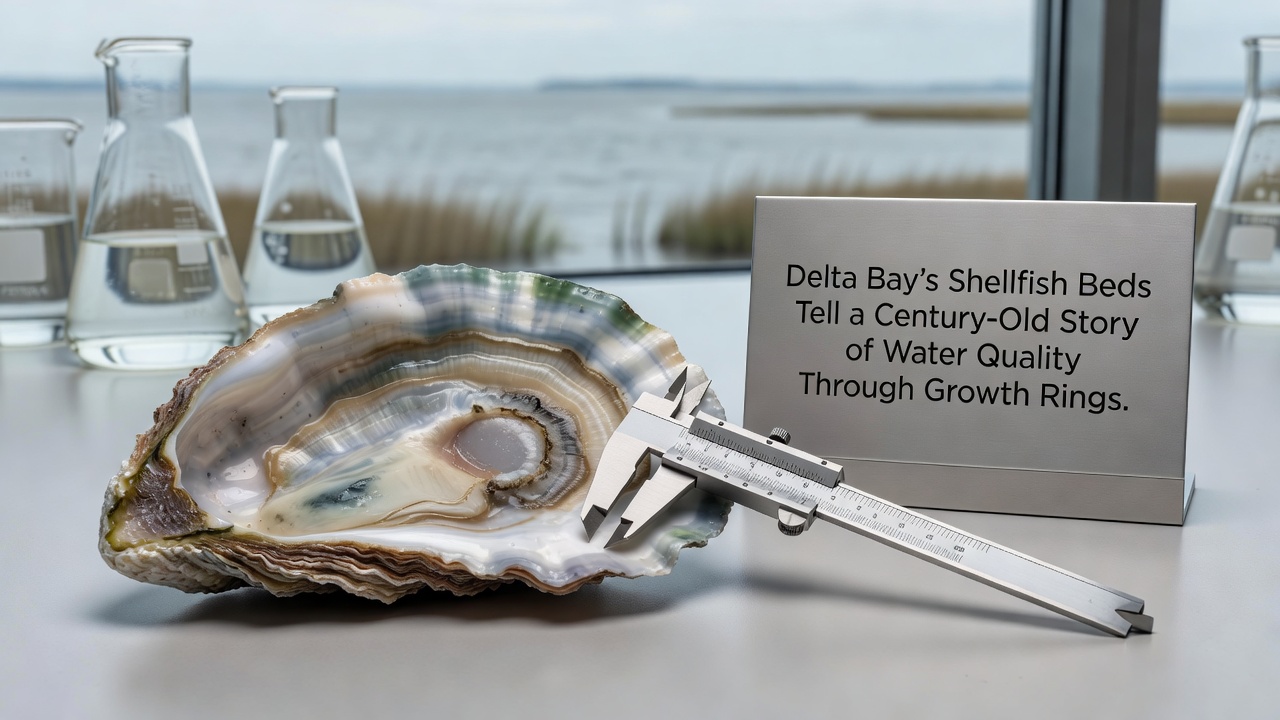
Shellfish beds along the shores of Delta Bay have preserved detailed records of environmental conditions through the incremental layers formed in their shells over decades and centuries, and researchers have begun to decode these patterns to reconstruct shifts in water quality that extend back to the late 1800s.
Growth rings in species such as oysters and clams accumulate much like those found in trees, with each band reflecting changes in temperature, salinity, nutrient levels, and pollutant exposure during the animal's lifespan, while scientists collect samples from both living beds and historical deposits to build timelines that span more than one hundred years.
Understanding Sclerochronology in Coastal Environments
The study of these shell structures, known as sclerochronology, allows analysts to measure trace elements and stable isotopes within individual rings, and data collected from Delta Bay shows clear correlations between ring thickness and historical events such as industrial expansion along nearby waterways in the early twentieth century.
Thinner rings often correspond to periods of elevated sediment load or chemical contamination, whereas wider bands align with intervals of improved conditions following regulatory changes in the mid-1900s, and cross-referencing these measurements with sediment cores from the same locations provides additional confirmation of the environmental signals preserved in the shells.
Historical Patterns Revealed by Shell Analysis
Analysis of shells collected from multiple sites within Delta Bay indicates that water quality deteriorated noticeably between 1900 and 1950 as agricultural runoff and early manufacturing activities increased, yet recovery trends appear in rings formed after the 1970s when wastewater treatment standards tightened across the region.
One research team documented a sharp decline in ring density during the 1930s drought years followed by a rebound after major flood events redistributed nutrients, and these findings match independent records maintained by regional monitoring stations that began operations in the 1920s.
Modern Applications of Long-Term Shell Data
Current monitoring programs now incorporate growth-ring data to establish baseline conditions before new development projects begin, and this approach helps distinguish natural variability from human-induced changes in salinity and dissolved oxygen levels that affect shellfish health today.
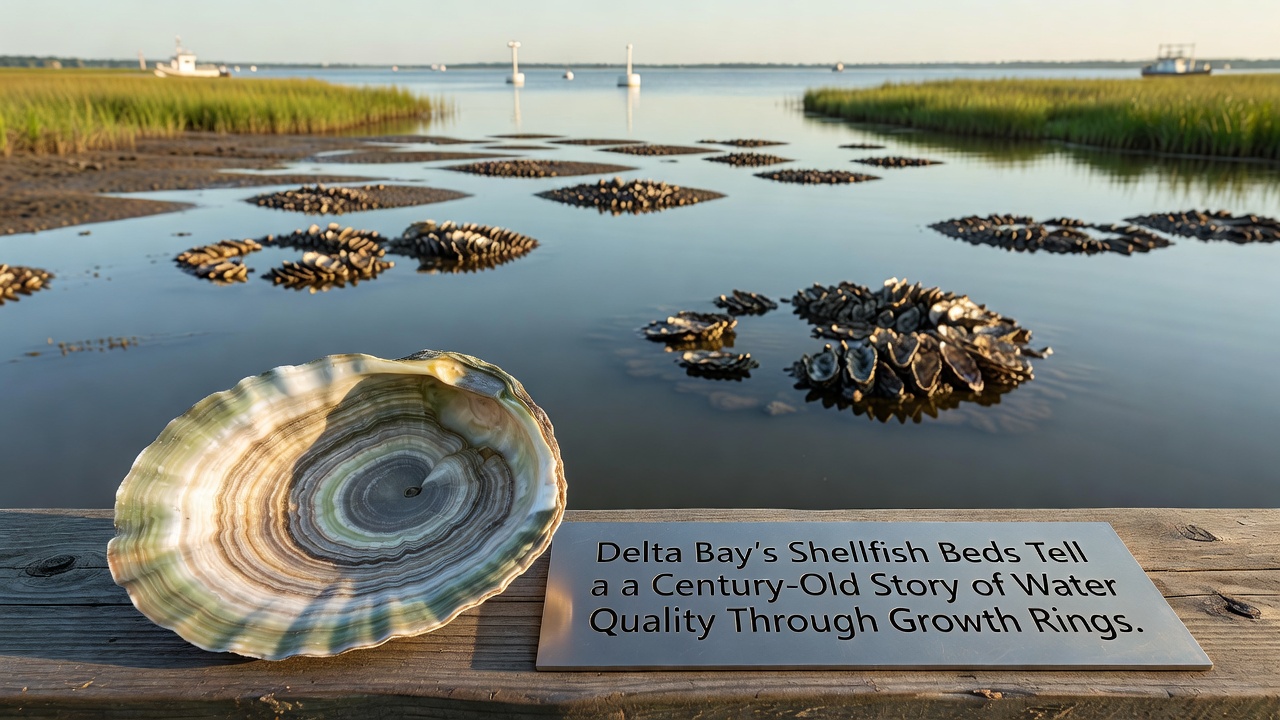
Studies released in September 2026 by teams working in partnership with the United States Geological Survey have extended these timelines even further by including shells recovered from submerged archaeological contexts, and the combined dataset now covers continuous records from 1885 through the present.
Integration with Broader Coastal Research
Delta Bay findings contribute to larger efforts coordinated by Environment and Climate Change Canada to compare growth patterns across multiple estuaries along the Pacific coast, while similar projects in Australian coastal zones use the same techniques to track long-term effects of changing ocean chemistry.
These international comparisons reveal that some stressors, such as temperature fluctuations, produce consistent signatures across distant regions, whereas local pollution events create distinct anomalies visible only in specific shell collections.
Conclusion
Shell growth rings continue to serve as reliable archives for water quality trends in Delta Bay, and ongoing sampling combined with refined chemical analysis promises to deliver even higher-resolution reconstructions of past conditions that inform present-day management decisions.